

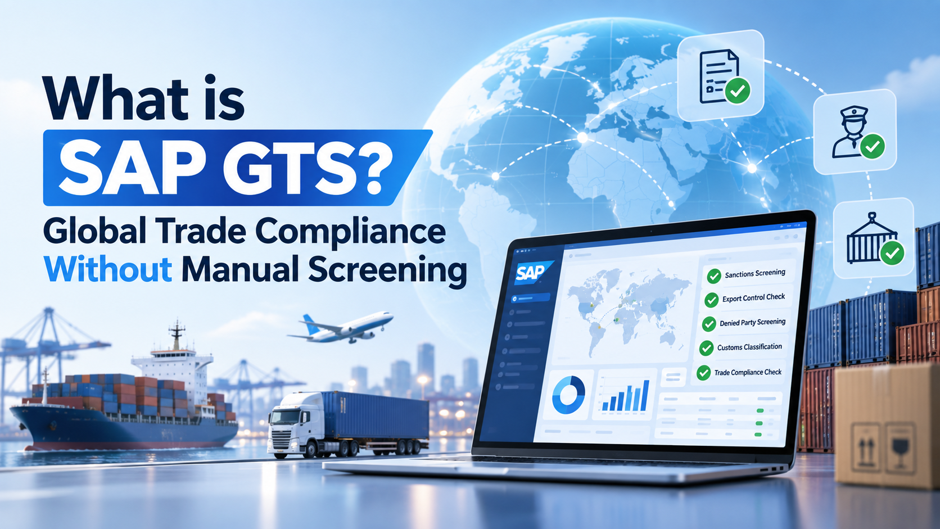
Sanctions, export-control lists, and other restricted-party lists are maintained by authorities around the world and can change as governments add, amend, or remove names, aliases, entities, and restrictions. That creates a moving compliance target for companies trading across several jurisdictions. The risk is wider than a simple exact-name match. Organizations also need reliable customer and supplier identity data, the right list content, controlled review of possible matches, and evidence showing how a transaction was cleared. In July 2025, Cadence Design Systems agreed to plead guilty and resolve parallel U.S. criminal and civil export-control actions involving sales and transfers to the National University of Defense Technology, a Chinese military university that had been on the U.S. Entity List since 2015. The coordinated resolution exceeded $140 million in aggregate net penalties and forfeiture. Because the case involved known links and an alias relationship, it shows why end-user identification, escalation, and transaction controls matter as much as list matching itself.
Manual reviews can work at low volume, but the burden rises when the same business must screen new and changed partners, rescreen existing master data after list updates, review possible matches, determine license requirements, prepare customs information, and retain a defensible record of each decision. SAP Global Trade Services (SAP GTS) is an enterprise platform in SAP’s trade-management landscape that integrates many of these controls with operational transactions. Depending on configuration and deployment, it supports sanctioned-party-list screening, embargo and legal-control checks, customs processing, product classification, preference management, and Intrastat. In a governed setup, these capabilities tie screening, legal-control, customs, classification, preference, and reporting decisions to transaction data and retained evidence, while the deployment model determines how GTS connects with the surrounding SAP landscape.
TL;DR
● SAP GTS is SAP’s platform for managing international trade compliance and customs-related processes, covering compliance, customs, preference management, product classification, and Intrastat
● Its core areas are Compliance Management (sanctioned-party screening, embargo checks, and license management), Customs Management (declarations, duties, and procedures), and Preference Management (rules of origin and duty savings)
● SAP GTS can run standalone or co-deployed with SAP S/4HANA, sharing a system instance while staying logically separate in its own client
● Sanctioned-party-list screening compares partner and document data against restricted-party content and can block or hold a transaction for review when a possible match appears
● Manual screening struggles to scale because of list volume, update frequency, false positives, fragmented evidence, and inconsistent review standards
● Automated screening centralizes the audit trail and applies rules consistently, but still requires accountable human review of every possible match
● Penalties for missed sanctions or export-control violations can reach hundreds of thousands of dollars per violation, or far more in criminal cases, as shown by the 2025 Cadence Design Systems resolution of over $140 million
● A phased rollout, auditing the current process, scoping deployment, testing scenarios, then expanding, reduces the risk of coverage gaps after go-live
What Is SAP GTS
SAP Global Trade Services (SAP GTS) is SAP’s solution for managing international trade compliance and customs-related processes across connected business systems. It can work with SAP ERP and SAP S/4HANA feeder systems and can be installed as a standalone GTS system or, for supported releases, co-deployed with SAP S/4HANA. In a co-deployment, GTS can share a system instance while remaining logically separate in its own client, so it should not be described as an embedded GTS function. The system receives relevant business-partner, product, and transaction data from feeder processes and applies configured trade checks before or during cross-border execution. This makes compliance part of the transaction flow rather than a disconnected review that happens only after a sales or shipping document has already progressed.
Companies that manufacture, distribute, or sell internationally can use SAP GTS across several connected areas of work. These include deciding whether a transaction is permitted or requires a license, preparing customs declarations and related records, classifying products for trade purposes, and managing origin and preference evidence. SAP’s current product documentation lists Products and Classification, Compliance Management, Customs Management, Preference Management, and Intrastat as major functional areas. Without an integrated trade system, the same controls may be divided among spreadsheets, email, broker portals, government websites, and separate screening tools. That can make it harder to keep master data aligned, apply the same rules to similar transactions, and reconstruct the evidence behind a release decision when an audit or internal review occurs.
SAP S/4HANA also includes International Trade capabilities for areas such as basic export control, product classification, and Intrastat. They do not equal the broader SAP GTS scope. Sanctioned-party-list screening is not provided by SAP S/4HANA International Trade alone; companies may use SAP GTS or SAP Watch List Screening, depending on the target architecture. Customs procedures, preference management, feeder-system count, country coverage, and legal-control depth should drive the choice. The decision is therefore about required functions and regulatory scope, not company size.
Picture a manufacturer sourcing electronic components from suppliers in eight countries and shipping finished products to customers in 40 more. Incoming and outgoing transactions can involve partner screening, destination restrictions, export-control classification, license requirements, customs data, and evidence about origin. The quality of supplier and product master data affects several of those decisions before a shipment reaches a border. SAP S/4HANA International Trade may cover a more focused set of classification and export-control needs, while SAP GTS becomes relevant when the organization needs broader compliance, customs, preference, multi-ERP, or specialized trade processes. The distinction is functional coverage and control complexity, not an unsupported claim that one platform can handle a specific transaction volume while the other cannot.
The Core Capabilities Inside SAP GTS
SAP GTS spans more than three product areas. Compliance Management, Customs Management, and Preference Management cover much of the operational work connecting screening, border processing, and preference treatment. SAP’s current product documentation also treats Products and Classification and Intrastat as separate functional areas. Compliance Management, Customs Management, and Preference Management can use shared master and transaction data, but each applies its own legal rules, configuration, and decision logic. Their outputs serve different regulatory purposes even when they begin from the same underlying business data.
| Capability | What It Covers | Why It Matters |
| Compliance Management | Sanctioned-party-list screening, embargo checks, legal control, and license management | Can block or hold configured business processes when a partner, destination, or product control requires review or authorization |
| Customs Management | Electronic customs declarations, customs procedures, duty calculation, and import/export documentation | Standardizes supported customs processes and reduces duplicate data entry where country-specific electronic procedures are available |
| Preference Management | Rules-of-origin determination, preference processing, and long-term supplier declarations | Helps determine and document eligibility for preferential duty treatment under configured trade agreements |
These three capabilities can be used according to the organization’s trade footprint and legal requirements. A business with limited cross-border activity may place most of its attention on compliance management, while a manufacturer importing components and exporting finished goods may need compliance, customs, and preference processes together. In a connected sales-order and delivery flow, one transaction can trigger partner screening, legal-control checks, customs preparation, and preference-related processing at different points. Sharing consistent partner, product, and document data reduces unnecessary re-entry, but it does not make the checks interchangeable. A sanctioned-party result, a license determination, a customs declaration, and a preference calculation answer different compliance questions.
Product classification supports legal control, customs processing, preference management, and Intrastat, but it does not drive sanctioned-party-list name matching. SAP GTS can use tariff numbers, commodity codes, control classes, and other foreign-trade classifications where required. Under U.S. export rules, that can include an Export Control Classification Number, or ECCN. A wrong classification can affect license decisions, duties, origin processing, or statistical reporting. SPL screening is different because it compares business-partner and address data with configured restricted-party content. Both product and partner data matter, but they support different controls.
How Denied-Party Screening Works
Denied-party screening is a common umbrella term for checking customers, suppliers, consignee parties, banks, and other relevant business partners against sanctions and restricted-party content. SAP GTS refers to this function as sanctioned-party-list, or SPL, screening. The people and organizations on those lists are not all subject to the same legal consequence. A designation can create a transaction prohibition, blocking requirement, export-license requirement, presumption of denial, or another restriction depending on the authority and legal program involved. SAP GTS sanctioned-party-list screening can be configured to compare business-partner addresses or document partners with the SPL master data in the system, including synchronous screening of new or changed partner data where that scenario is activated.
Screening can use list content relevant to the company’s trade footprint, including the U.S. Treasury’s SDN List, the U.S. Commerce Department’s Entity List, European Union sanctions content, and other required sources. There is no fixed universal list count for every SAP GTS customer. Coverage depends on jurisdictions, products, transaction types, and legal obligations. When matching logic identifies a possible hit, configured processes can be blocked or held. A reviewer then checks names, addresses, aliases, countries, identifiers, and transaction context to decide whether the result is a false positive or needs compliance action.
OFAC may impose civil penalties for sanctions violations on a strict-liability basis, so liability can arise even without knowledge that a prohibited transaction occurred. That does not mean every possible match is a violation or every violation receives the same penalty. OFAC weighs enforcement factors, while BIS-administered export controls can create separate licensing, denial, and enforcement consequences. Screening is therefore one part of a wider control framework. Its reliability depends on accurate partner data, suitable list content, sensible matching settings, documented review, and escalation when ownership, end-use, end-user, or licensing questions remain unresolved.
Screening only when a relationship begins is not enough. A partner can be designated later, a list entry can change, or partner data can be updated. SAP GTS supports repeat screening after changes to partner, document, or sanctioned-party-list master data. The list content itself must come from configured providers or other approved sources and be loaded or integrated into the system. Administrators can then schedule or run screening against updated content. This distinction avoids implying that GTS independently discovers every government designation without a maintained data-supply process.
Why Manual Screening Doesn’t Hold Up at Scale
Manual screening can work in narrow, low-volume situations, but the control burden grows as jurisdictions, partners, transactions, and rescreening requirements increase. The challenge is maintaining the same coverage, evidence, review standard, and update discipline across a larger environment. Six recurring pressure points explain why companies often move from ad hoc checks toward a governed screening process.
● List coverage: a multinational business may need sanctions, export-control, debarment, and other restricted-party content from several authorities, and manually opening separate sources for every relevant check is slow and easier to apply inconsistently
● Update frequency: authorities add, remove, and amend entries throughout the year, so saved spreadsheets or one-time search results can become stale unless the organization has a controlled update and rescreening process
● False positives: common names, transliterations, aliases, incomplete addresses, and similar identifiers can produce possible matches that need context and reviewer judgment, increasing the workload as the screened population grows
● Fragmented audit evidence: decisions made across email, spreadsheets, screenshots, and separate portals can be documented, but the evidence is harder to standardize, search, retain, and tie back to the exact partner or transaction
● Inconsistent review: different people can apply different judgment to an ambiguous match if matching thresholds, escalation rules, supporting evidence, and release authority are not defined and used consistently
● Coverage gaps at scale: as partners and transactions increase, teams face more first-time checks, changed-data checks, list updates, and repeat reviews, which raises the chance of delayed rescreening or inconsistent escalation unless capacity and controls grow with the workload
Manual reviewers can be accurate when scope and evidence standards are controlled. The difficulty is keeping that process repeatable as sources, partners, documents, and list changes increase. A screening record should show what data was checked, which content and rules were used, what was found, and who released a possible match. When those elements sit in separate tools, teams spend more time reconstructing decisions and have fewer safeguards against inconsistent treatment of similar cases.
What Automated Screening Actually Changes
Automating screening inside SAP GTS changes where the control sits and how a possible match is handled. Configured checks can run when partner data is created or changed and when documents enter compliance processing, rather than depending on a separate manual lookup. A potential match can hold the affected process before it moves further. Automation cannot guarantee detection of every prohibited party because source data, list coverage, matching settings, aliases, and ownership information still matter. It does, however, make screening more consistent across recurring transactions and reduces reliance on individual memory.
When no potential match is found under configured rules, the process can continue without a reviewer handling a routine lookup. When a possible match appears, SAP GTS can block the partner or document for compliance review. The reviewer still decides whether the result is a false positive or requires the block to remain. Screening results, blocks, releases, and status data create a more centralized audit trail than an inbox-and-spreadsheet process. Automation therefore improves traceability, but it does not replace accountable review or clear release authority.
List updates also require a controlled operating process. SAP GTS does not independently know every new designation as soon as an authority publishes it. An organization receives sanctioned-party-list data from an approved provider or source, loads or integrates that master data, maintains the comparison content used by screening, and then runs or schedules the relevant rescreening scenarios. Operational ownership, whether handled internally or through ongoing SAP support, needs to cover failed data loads, background jobs, comparison-index maintenance where applicable, and exceptions that leave partners or documents unscreened. With those controls in place, the same governed list content and screening logic can be applied repeatedly instead of relying on individual staff members to notice and copy every list change into a local file.
What Slow or Missed Screening Actually Costs
The financial exposure is real, but there is no single universal ‘screening penalty.’ Consequences depend on the law or sanctions program involved, the facts of the transaction, the value at issue, whether conduct was knowing or willful, voluntary disclosure, cooperation, remediation, and other enforcement factors. A strict-liability civil regime does not mean every case receives the statutory maximum. Current U.S. reference points show the order of magnitude. BIS penalty guidance states that administrative violations of the Export Administration Regulations can carry a maximum monetary penalty of $374,474 per violation or twice the value of the transaction, whichever is greater, under the current published schedule. Federal inflation adjustments were not updated for 2026, so the 2025 federal amounts remain the current reference figures for this period.
| Violation or Enforcement Reference | Current Reference Point |
| OFAC civil penalty under IEEPA | Up to $377,700 per violation or twice the value of the underlying transaction, whichever is greater, under the current 2025/2026 federal schedule; other sanctions statutes have different maximums |
| BIS administrative penalty under ECRA | Up to $374,474 per violation or twice the value of the transaction, whichever is greater, under the current published schedule |
| Criminal ECRA violation | Up to $1 million in fines per violation and up to 20 years of imprisonment for criminal violations |
| Cadence Design Systems, 2025 resolution | More than $140 million in aggregate net criminal and civil penalties and forfeiture after coordinated DOJ and BIS credits |
Penalty ceilings are only part of the exposure. Under IEEPA-based OFAC programs, the current maximum civil penalty is the greater of $377,700 or twice the value of the underlying transaction per violation, while other sanctions statutes use different limits. BIS can also deny export privileges, which can disrupt business beyond the settlement amount. The 2025 Cadence resolution shows how criminal and civil proceedings can overlap: after coordinated credits between DOJ and BIS, aggregate net penalties and forfeiture exceeded $140 million. A case can also create shipment holds, legal review, investigations, remediation, license delays, and management time even when the statutory maximum is not imposed.
The cost comparison between manual and automated screening is more nuanced than a single savings percentage. Automation can reduce repeated lookups, rescreening effort, status tracking, and documentation work, but it still carries implementation, infrastructure, list-data, integration, maintenance, and reviewer costs. Poor matching settings can create excessive false positives, while weak data quality can undermine either approach. At low volume, a controlled manual process may be cheaper. As the screened population and recurring checks grow, automation can become more efficient because the same rules, records, and workflows are reused rather than recreated for each transaction.
Customs Management Beyond Screening
Screening addresses sanctions and restricted-party concerns. Customs Management covers another part of SAP GTS by supporting import and export processes used to communicate with customs authorities and manage customs-relevant transactions. Depending on country scope and configuration, SAP GTS can exchange electronic messages, support customs declarations and administrative documents, calculate customs-relevant values and duties, and produce required forms. These functions can use data transferred from connected sales, purchasing, delivery, and logistics processes, reducing the need to rebuild the same transaction record in a separate customs tool.
Customs requirements are not uniform. Electronic procedures, message formats, authorizations, data fields, and available SAP country functions vary by jurisdiction and release. A process used in Germany may therefore differ from one used in Brazil or the United States. SAP GTS standardizes supported country processes around available legal content and configuration rather than promising identical filing behavior everywhere. When feeder and GTS data are integrated correctly, connected flows can reduce duplicate entry and help keep partner, product, value, origin, and shipment information consistent.
The operational benefit is fewer avoidable handoffs and less manual re-entry, not a guaranteed customs-release time. Customs authorities, inspections, missing permits, incorrect classifications, incomplete documents, brokers, and system availability can still delay shipments. Accurate data and electronic communication can reduce preventable errors and provide clearer status when an exception occurs. That matters for time-sensitive freight because even short holds can affect delivery commitments, production, inventory, or customer service. Final release remains subject to the authority and the accuracy of the submitted information.
Preference Management and Duty Savings
Trade agreements can allow reduced or zero duty on qualifying goods, but eligibility depends on each agreement’s rules of origin and the evidence available for the product. Preference Management in SAP GTS supports determinations based on configured rules, product classifications, bills of material, processing requirements, and supplier-origin information. A finished product can contain internally produced materials and supplier components, so the same item may qualify under one agreement and fail another. The result depends on the specific origin test and country relationship rather than on one global preference rule.
Without a structured preference process, staff may need to trace bills of material, supplier declarations, classifications, and agreement rules case by case. SAP GTS makes the work more systematic by linking product and material data to configured preference rules. It should not be described as automatically capturing every possible duty saving. Results still depend on correct product structures, valid supplier evidence, accurate classifications, current rules, and proper use in customs transactions. When those inputs are governed, the system can support more consistent claims and the evidence needed to defend them.
Preference Management also supports long-term supplier declarations that provide origin information for materials supplied over a defined period. Those declarations must remain valid, connect to the correct products or materials, and support the preference rules being used. An expired, missing, or incorrect declaration can weaken a claim and require reassessment. SAP GTS can help track declaration status and validity so teams identify gaps before they affect preference treatment, especially when the determination relies on supplier-provided origin evidence.
Standalone or Co-Deployed: How SAP GTS Gets Deployed
SAP GTS, edition for SAP HANA can be operated in standalone and co-deployed architectures, including on-premises and SAP private-cloud scenarios. Co-deployment does not mean GTS becomes an embedded S/4HANA function. In supported co-deployments, GTS and SAP S/4HANA can share the same system instance while GTS remains logically separated in another client and keeps its own application role. The architecture decision affects infrastructure, resource planning, upgrade coordination, integration design, and commercial arrangements more than it changes the GTS functional scope itself. A company comparing cloud and on-premises deployment should therefore evaluate operational dependencies as well as infrastructure cost, especially when trade processing is business-critical and cannot tolerate unplanned downtime.
| Deployment Option | What It Means |
| Standalone, On-Premises | GTS runs on its own system and infrastructure and can connect to one or more supported feeder systems, providing greater separation for upgrades and resource planning |
| Co-Deployed With SAP S/4HANA | Supported GTS releases share a system instance with SAP S/4HANA while remaining logically separate in another client; the 2023 scenario began with SAP S/4HANA 2022 on SAP S/4HANA Foundation 2022 SP02 as the minimum foundation |
| Private Cloud, Standalone | GTS runs in a dedicated private-cloud environment separate from the SAP S/4HANA system, retaining infrastructure and lifecycle separation |
| Private Cloud, Co-Deployed | GTS shares private-cloud infrastructure with a compatible SAP S/4HANA system while retaining logical separation, with lifecycle and resource dependencies that need joint planning |
For co-deployment introduced with SAP GTS, edition for SAP HANA 2023, SAP guidance identified SAP S/4HANA 2022 on SAP S/4HANA Foundation 2022 SP02 as the minimum foundation for that scenario. Later GTS releases have their own product-version requirements, so teams should verify compatibility for the exact target release rather than treat the 2023 minimum as permanent. Functional fit remains the main design question. Companies with complex customs procedures, preference management, several feeder systems, or demanding legal controls may need the broader GTS scope, while a simpler trade footprint may fit a narrower SAP S/4HANA International Trade design.
What’s Changing: Fiori and AI-Assisted Classification
SAP GTS, edition for SAP HANA changes the user experience for teams moving from SAP GTS 11.0. The current product centers end-user access on SAP Fiori, so migration planning needs to cover apps, catalogs, roles, authorizations, navigation, and training rather than assume a one-for-one continuation of transaction-code habits. Some trade concepts remain familiar, but screens and workflows can differ. This matters in 2026 because mainstream maintenance for SAP GTS 11.0 ended on December 31, 2025, leaving customers on that release in customer-specific maintenance rather than the mainstream innovation and legal-change path.
AI-assisted classification is developing in SAP’s wider international-trade landscape, but it should be described separately from SAP GTS sanctioned-party screening. In the SAP S/4HANA Cloud 2608 trade-classification process, the International Trade Classification Agent can use product information and trade regulations to generate proposed customs tariff numbers or commodity codes with supporting rationale. SAP’s documented workflow keeps a classification specialist in the process: the user reviews the generated product profile and proposals, selects the proposal that fits the requirement, submits it, and then saves the classification. That makes the agent an aid for product classification and review, not an autonomous determination of a partner’s sanctions status and not a substitute for license or restricted-party controls in SAP GTS.
AI-assisted classification can move some work from a blank-start search toward review of a reasoned proposal, but the control requirement remains. Teams still need accurate product descriptions, the correct numbering scheme and validity period, suitable supporting documents, and a standard for accepting or rejecting generated results. Because saved tariff or commodity codes feed later trade processes, a wrong approval can affect downstream customs or compliance decisions. Organizations should therefore define who can generate proposals, who approves classifications, what evidence is retained, and how later changes are reviewed.
Rolling Out SAP GTS Without Disrupting Trade Operations
Implementing SAP GTS, or moving from an older release to GTS, edition for SAP HANA, touches business-partner data, product classification, feeder-system integration, legal regulations, sanctioned-party content, customs interfaces, roles, and exception workflows. An SAP implementation in this area can fail operationally even when the software is installed correctly if inherited master data has not been reviewed, legal scope is incomplete, interfaces are not reconciled, or blocked-document handling has not been tested with real business scenarios. Deployment cost should also be considered with functional coverage rather than in isolation. A lower infrastructure price does not help if the selected architecture omits a required screening, customs, or preference process and the gap is discovered only after production transactions begin to fail or require manual workarounds.
A practical rollout can use four stages as a control sequence. They are not the only valid SAP project methodology, and some activities will overlap, but the order keeps scope and data quality visible before the team commits to production. The implementation partner and internal trade, IT, finance, logistics, and compliance owners should agree on what will be tested and what evidence will count as acceptable before cutover. That is especially important for blocked-partner reviews, license determinations, classification mappings, customs messages, and background screening jobs because each area can fail differently and may need a different owner to correct the root cause.
- Audit the current trade-compliance process first, including list sources, legal regulations, screening frequency, reviewer roles, license controls, classifications, customs procedures, preference processes, data ownership, and known gaps.
- Choose deployment and functional scope from compliance requirements, feeder systems, customs countries, screening needs, preference processes, upgrade dependencies, and operating constraints rather than infrastructure cost alone.
- Run representative screening, classification, integration, and customs scenarios before cutover where comparison is practical, then reconcile differences in matches, blocks, releases, classifications, document status, and authority messages.
- Expand or stabilize customs, preference, or other capabilities only when their data, integrations, roles, monitoring, and exception handling have been tested well enough to support the target operating model.
A parallel comparison is not a universal SAP requirement, but it is a useful risk-control technique when a business is replacing a critical screening or classification process. The SAP implementation process should use differences as evidence to investigate configuration, data, matching thresholds, mapping, authorization, or integration problems rather than treating a planned go-live date as proof that the system is ready. A test that exposes a problem has succeeded if the issue is corrected before production. Cutover readiness should therefore be based on reconciled results, understood exceptions, trained reviewers, working monitoring, and a clear fallback plan for critical trade transactions if an interface or content load fails after go-live.
FAQs
What does SAP GTS stand for?
SAP GTS stands for SAP Global Trade Services. The current SAP HANA-based product supports international trade compliance and customs-related processes, including classification, Compliance Management, Customs Management, Preference Management, and Intrastat.
Is SAP GTS the same as SAP International Trade in SAP S/4HANA?
No. SAP S/4HANA International Trade provides embedded trade functions, while SAP GTS covers a broader scope that can include sanctioned-party screening, customs management, preference management, and more complex legal-control processes.
Can SAP GTS run alongside SAP S/4HANA, or does it need to be standalone? Both are possible. SAP GTS can run standalone or in supported co-deployment scenarios with SAP S/4HANA. Co-deployment shares a system instance while keeping GTS logically separate in another client.
How does denied-party screening work inside SAP GTS?
SAP GTS compares configured partner or document data with sanctioned-party-list master data. A possible match can block or hold the process for review, while a cleared result can allow it to continue.
How many restricted-party lists does SAP GTS screen against?
There is no fixed universal number. Each organization uses the sanctioned-party and restricted-party content required for its jurisdictions, legal regulations, products, and trade footprint through approved data sources.
What happens if a company misses a sanctions or export-control violation? Consequences depend on the governing law, regulator, conduct, and transaction. They can include civil penalties, criminal exposure for willful conduct, denied export privileges, shipment disruption, investigations, and remediation costs.
Does SAP GTS handle customs declarations, or only screening?
It handles both compliance and customs functions. Customs Management can support import and export declarations, electronic communication, customs procedures, and related documents where the relevant country function is available and configured.
What is Preference Management in SAP GTS?
Preference Management helps determine whether goods meet rules of origin for preferential treatment. It can use classifications, bills of material, preference rules, and supplier-origin evidence such as long-term supplier declarations.
What’s the difference between SAP GTS 11.0 and GTS, edition for SAP HANA? GTS, edition for SAP HANA is the current product line with SAP HANA and a Fiori-centered user experience. SAP GTS 11.0 left mainstream maintenance after December 31, 2025.
Do companies need to migrate to SAP S/4HANA before adopting GTS, edition for SAP HANA?
Not necessarily. A standalone GTS, edition for SAP HANA system can connect to supported SAP ECC or SAP S/4HANA feeder systems. Co-deployment, however, requires compatible SAP S/4HANA and GTS releases.
How is SAP using AI in international trade classification? SAP’s International Trade Classification Agent can propose tariff numbers or commodity codes from product and regulatory information. A classification specialist reviews the proposal before the classification is submitted and saved.
Is automated screening cheaper than manual screening?
It can be at scale, but there is no universal savings percentage. The comparison should include transaction volume, reviewer effort, list-data costs, false positives, implementation, integration, infrastructure, and ongoing maintenance.
Which industries commonly use SAP GTS?
Common use cases appear in manufacturing, aerospace and defense, electronics, automotive, chemicals, life sciences, retail, and distribution. The stronger indicator is cross-border complexity rather than the industry label itself.
Can a small or mid-size company justify implementing full SAP GTS?
Yes. A smaller company with controlled products, complex re-export rules, multiple customs procedures, or extensive restricted-party screening can have a stronger need than a larger business with simpler trade.
What implementation risks should companies plan for with SAP GTS?
Key risks include poor master data, incomplete legal scope, weak feeder-system integration, list-content failures, classification errors, authorization gaps, customs connectivity issues, inadequate testing, and unclear reviewer workflows.